


When was the last time you found yourself scrambling to adjust your watch or clock? Uhrenunstellung, or the art of clock adjustment, is a topic that often gets overlooked until daylight saving time rolls around and throws everyone into a tizzy. It’s like that friend who always shows up late to the party—annoying but somehow necessary for a good time.
Overview of Uhrenunstellung
Uhrenunstellung, or clock adjustment, plays a key role in everyday life. This practice ensures timekeeping aligns with seasonal changes, particularly during daylight saving time.
Definition and Significance
Uhrenunstellung refers to the practice of adjusting clocks to match daylight changes. This adjustment prevents confusion and maintains scheduling efficiency. Clocks are moved forward or backward by one hour, impacting various sectors such as transportation and business. Awareness of this practice promotes punctuality and improves time management for individuals and organizations.
Historical Context
Historically, Uhrenunstellung traces back to the early 20th century. George Vernon Hudson proposed daylight saving time in 1895, aiming to optimize daylight utilization. Adoption varied by region, with many countries implementing it during World War I as a measure to conserve energy. This historical shift represented a significant change in societal timekeeping habits. Over the decades, several nations have reconsidered and adjusted their practices regarding Uhrenunstellung, reflecting its cultural and practical significance.
Types of Uhrenunstellung
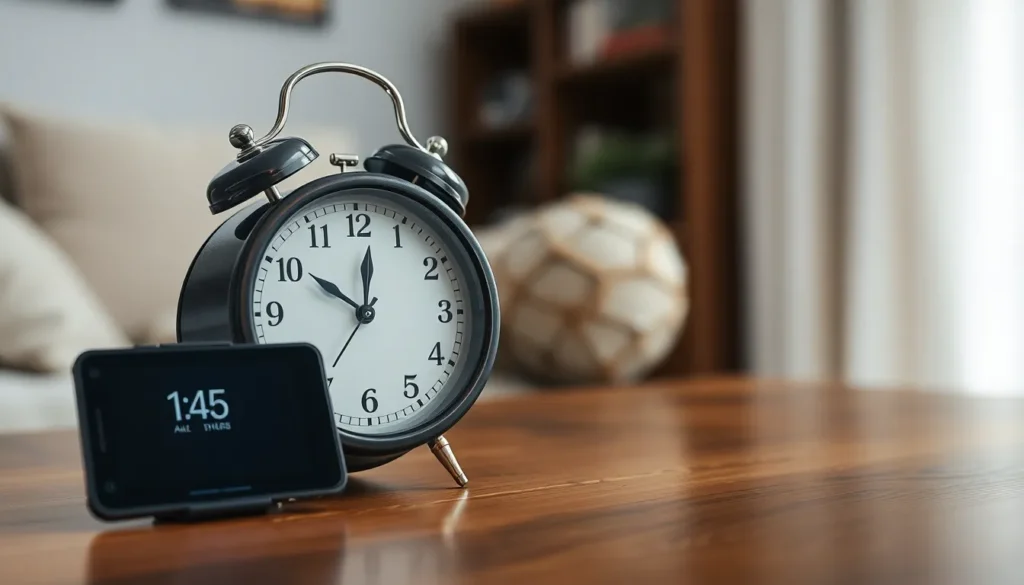
Two main types of Uhrenunstellung exist: manual adjustments and automatic adjustments. Each type has unique characteristics and applications in daily life.
Manual Adjustments
Manual adjustments involve directly changing the clock settings by hand. Users physically turn the knobs or press the buttons to set the time. This method is common with traditional analog clocks and some digital devices. Individuals often perform these adjustments twice a year during daylight saving time. For example, clocks spring forward in March and fall back in November. Many people appreciate manual adjustments for their straightforwardness, though they require awareness and attentiveness to maintain accurate timekeeping.
Automatic Adjustments
Automatic adjustments are programmed to change the time without user intervention. Devices like smartphones and computers usually handle this process seamlessly. These gadgets rely on internet connections or GPS signals to update time settings. Automatic adjustments simplify the Uhrenunstellung process, reducing potential human error. When daylight saving time approaches, devices automatically shift the clock forward or backward. This feature enhances convenience, allowing users to focus on their daily activities without worrying about manual changes.
Benefits of Uhrenunstellung
Uhrenunstellung offers several benefits that enhance daily life. This practice ensures that timekeeping remains accurate and relevant throughout the year.
Precision in Timekeeping
Accurate timekeeping depends on regular adjustments. Uhrenunstellung minimizes discrepancies between the official time and actual solar time. This precision is crucial for various sectors, especially transportation and telecommunications. When clocks reflect the correct time, businesses operate more efficiently, reducing scheduling conflicts. Moreover, timely adjustments help maintain synchronization across regions, fostering better cooperation in international dealings. Proper time alignment also aids individuals in managing their personal schedules, leading to improved productivity and time management.
Enhancements in Functionality
Functionality improves significantly with Uhrenunstellung. Many devices, such as smartphones and computers, automatically adjust the time. These automatic changes reduce the risk of human error, ensuring individuals stay on schedule effortlessly. Clocks that synchronize correctly with daylight hours foster a better quality of life. As day length changes, it becomes easier to maximize daylight for work and leisure activities. Adjusting clocks also encourages habits aligned with seasonal variations, improving overall well-being. Synchronization across devices allows for seamless integration of technology into everyday routines.
Common Challenges in Uhrenunstellung
Uhrenunstellung presents several challenges that can affect timekeeping accuracy. Various factors contribute to difficulties during this important process.
Technical Difficulties
Technical difficulties often arise due to device compatibility issues. Some clocks may not support automatic adjustments, leading to reliance on manual changes. Internet connectivity plays a significant role; disruptions can prevent devices from syncing correctly. Users might experience software glitches affecting the time change feature. Additionally, certain geographical locations may not receive timely updates from time servers, complicating adjustments further.
User Errors
User errors are common during Uhrenunstellung, especially with manual adjustments. Individuals may forget to change their clocks, resulting in discrepancies. Confusion can occur between remembering whether to advance or reverse the clock by one hour. Furthermore, familiar devices like microwaves or traditional clocks might not feature clear indicators, leading to incorrect settings. Rushing to complete the adjustment can cause mistakes, impacting punctuality in daily schedules.
Future Trends in Uhrenunstellung
The evolution of Uhrenunstellung is evident, influenced by technological advancements and shifting market dynamics.
Advancements in Technology
Innovations continue to enhance the way clocks and devices adjust time. Smart technology has introduced features that streamline the Uhrenunstellung process. Devices like smartwatches automatically synchronize with time standards through network signals. Connected home systems manage multiple clocks, ensuring seamless transitions during daylight saving time. Integration with smartphones provides notifications about upcoming adjustments, making it easier for users. Artificial intelligence-empowered applications may analyze user behavior to optimize time changes, increasing convenience. Such advancements promise to minimize human error while maintaining accuracy in timekeeping.
Predictions for Market Growth
Predictions indicate a significant expansion in the Uhrenunstellung market. With increasing reliance on smart technology, a rise in demand for automated systems emerges. Analysts project a compound annual growth rate of 5% over the next five years. A growing emphasis on sustainability fuels adjustments to minimize energy usage related to timekeeping. As more businesses adopt smart technologies, the integration of Uhrenunstellung in various industries will likely increase. Furthermore, public awareness campaigns could drive interest in time accuracy, contributing to market expansion. Overall, continued developments signal robust growth potential within the Uhrenunstellung sector.
Uhrenunstellung remains a vital aspect of modern life. Its impact on daily routines and various sectors underscores the importance of accurate timekeeping. As technology continues to evolve, the shift towards automatic adjustments is simplifying the process and minimizing errors.
With the increasing reliance on smart devices, the future of Uhrenunstellung looks promising. Embracing these advancements will enhance time management and overall efficiency. Acknowledging the significance of clock adjustments ensures that individuals and businesses can adapt to seasonal changes seamlessly. Staying informed about Uhrenunstellung not only fosters punctuality but also enriches the quality of life in a fast-paced world.


