

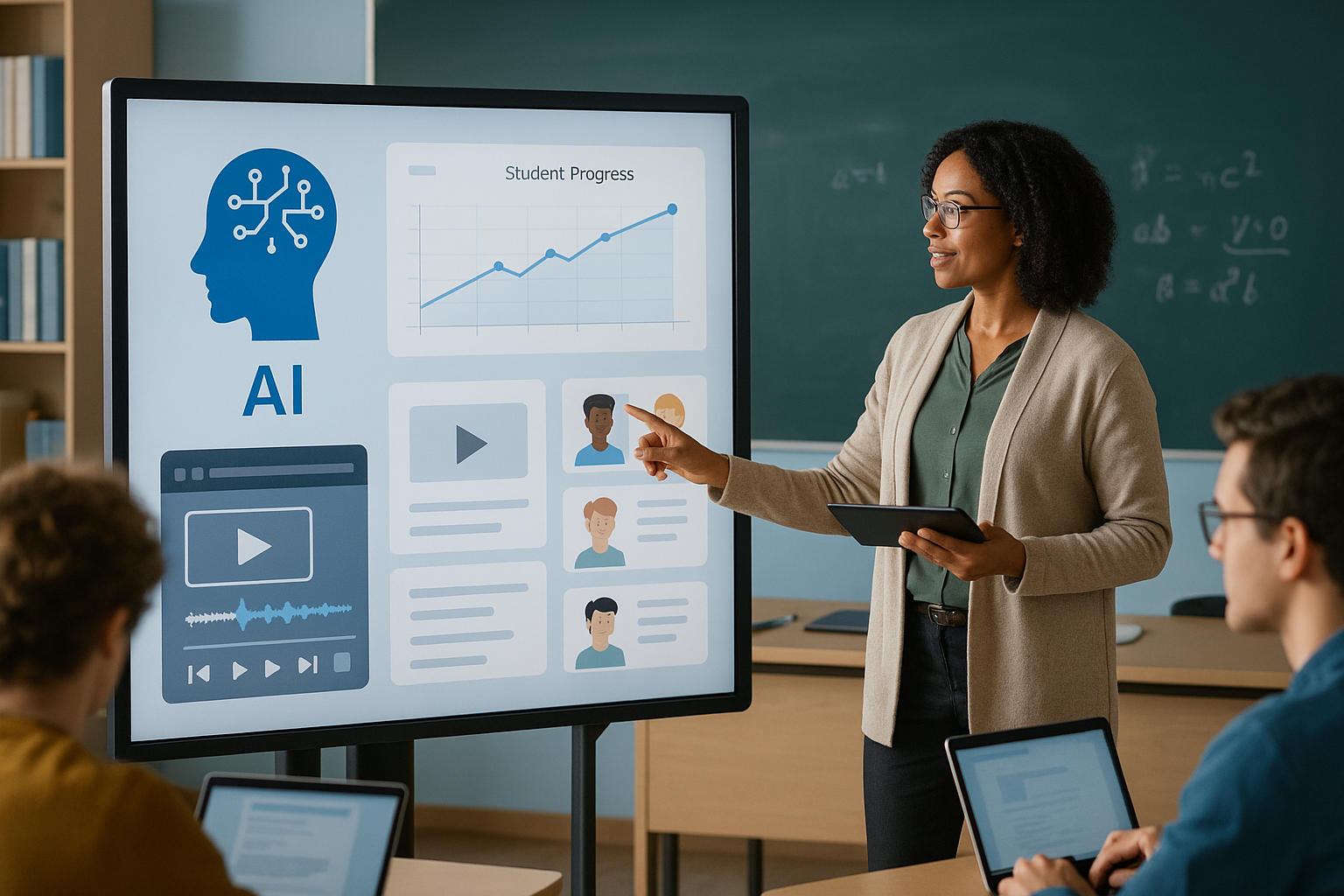
As an educator or education professional navigating the evolving landscape of higher education, you’ve likely noticed how artificial intelligence (AI) is becoming an increasingly significant part of your daily operations. From course delivery and curriculum design to student engagement and content distribution, AI is transforming how you teach, assess, and interact with students.
The integration of AI is not about replacing your role but redefining it. As technology reshapes student expectations and institutional strategies, you’re moving beyond the traditional confines of instruction to embrace roles such as content curator, digital facilitator, and data-informed mentor.
Shifting Paradigms in Teaching and Learning
In the context of higher secondary and tertiary education, digital transformation is now central to delivering a meaningful learning experience. Whether you’re teaching in-person, hybrid, or fully online, the tools powered by AI are enabling more personalized and efficient learning models.
You’re no longer just a lecturer in front of a classroom. Instead, you are a guide who facilitates access to custom learning paths tailored to each student’s pace, strengths, and interests. AI tools help automate administrative tasks and assessments, allowing you to focus more on mentoring and designing impactful experiences.
Personalization and AI-Driven Content Creation
The potential of AI to facilitate individualized learning is among its most significant contributions to higher education. AI systems can analyze data from student interactions to help you tailor content for individuals or groups. Whether it’s recommending supplementary resources, generating adaptive quizzes, or scheduling learning modules based on student behavior, AI helps you meet learners where they are.

Moreover, AI content creation tools let you develop new materials without starting from scratch every time. This evolution is especially important when you’re curating digital resources as part of modern higher education marketing strategies. From SEO for higher education to targeted communication campaigns, AI-generated content can be aligned with academic goals while being optimized for online visibility.
Redefining the Role of Educators
Your role as a teacher is now more strategic. Instead of delivering uniform lectures to every student, you’re increasingly overseeing the quality and relevance of AI-curated resources. You evaluate tools, guide ethical AI implementation, and ensure that content supports student growth. This shift places a stronger emphasis on your judgment and expertise in curriculum design.
In collaborative settings, you also serve as a facilitator who helps students use AI responsibly. This could involve teaching students how to critically evaluate AI-generated responses or guiding them to use content creation tools constructively.
Enhancing Engagement with Visual Learning Tools
Visual content has always played a crucial role in helping students grasp complex concepts. Now, with AI-powered tools like an educational video maker, you can develop more engaging visual materials in less time. Platforms such as invideo AI allow you to create short-form lectures, animated explainers, or scenario-based simulations that cater to diverse learning preferences.
An educational video maker not only enriches your content but also aligns with how students consume information today, visually, interactively, and often on-demand. These videos are useful for asynchronous learning, especially in higher education institutions where course structures are increasingly flexible. Additionally, AI tools can suggest video formats or content sequences based on learner data, making it easier for you to adapt lessons to evolving academic needs.
When paired with AI video apps, these solutions can further simplify editing, captioning, and optimizing videos for various platforms. This makes it easier for you to scale your teaching efforts and reach wider audiences without compromising on quality.
Supporting Group-Based and Individual Learning
AI in higher education isn’t limited to individual customization. It also enhances collaborative learning environments. You can use AI-driven analytics to monitor group dynamics, identify underperforming teams, or recommend peer-to-peer activities. This information helps you make informed decisions about group assessments, project assignments, and classroom engagement strategies.

By offering insights into both individual and collective learning patterns, AI lets you create more inclusive, equitable classroom experiences. This dual approach ensures that no student is left behind, and high-performing learners are continuously challenged.
AI and Institutional Growth
Beyond the classroom, AI also plays a role in institutional strategy. As someone involved in higher education marketing strategies, you can use AI to identify student trends, optimize content for search engines, and personalize outreach messages. AI tools help streamline recruitment, retention, and alumni engagement initiatives, making them more data-informed and impactful.
Incorporating SEO for higher education into content planning and leveraging AI for market segmentation ensures your courses and programs stand out in an increasingly competitive space. Whether you’re a faculty member or an administrator, your involvement in these processes now extends into areas traditionally handled by marketing departments.
Conclusion
AI is not diminishing your influence as an educator; it’s amplifying your capabilities. By embracing this digital shift, you become an orchestrator of enriched learning experiences, both personalized and scalable. Whether you’re creating interactive videos, analyzing student progress, or optimizing content for broader outreach, AI equips you to meet the evolving demands of higher education.
As you adapt to these changes, tools like an educational video maker offer practical ways to translate complex ideas into accessible, visual formats that resonate with today’s learners. With thoughtful integration and continuous learning, you can harness AI to not only improve academic outcomes but also shape a more engaging, inclusive, and forward-thinking educational environment.


